






The Traditional Heritage of Neos Marmaras
Memory, heritage, and identity from Prokonnesos
The identity of Neos Marmaras is inseparably linked to historical memory, the refugee experience, and the culture brought by its first inhabitants. The traditional character of Neos Marmaras was not shaped by chance, but was born out of displacement, the transfer of memory, and the deep need to preserve identity. Its cultural profile remains a living part of everyday life to this day, not as a museum element, but as a continuation and evolution of a way of life.
Prokonnesos and Marmara in the Sea of Marmara
Historicaly, the starting point of Neos Marmaras lies in Prokonnesos, also known as Proikonisos. Before it was named “Marmara Adası,” the Island of Marmara, Prokonnesos was a Greek land with a history spanning centuries. Prokonnesos was known from the Roman and Byzantine periods for its quarries and white marble deposits, which, together with fishing, seafaring, trade, and viticulture, formed a lasting source of life, work, and identity for the people of the area. The roots of Marmara and its flourishing community were closely connected to social, religious, and cultural life. The people of Marmara lived according to their traditions, maintained strong family ties, and developed a distinctive folk culture deeply connected to the sea. Then came the turning point: the founding of Neos Marmaras on August 1, 1924.
“Tradition was not carried as a memory, but as a need for survival and self-definition. “
The Refugees from Marmara and the Transfer of Tradition
After the Greek-Turkish War (1919-1922) and the population exchange, the refugees from Marmara settled in Sithonia, Halkidiki, where they founded Neos Marmaras. The first years were years of survival. They came before growth and development — years in which people had to put down roots, build a new daily life, create homes, and stand once again as a community. They did not bring with them only a few belongings; they brought memories, customs, traditions, and an entire way of life. This period is not simply an “unfortunate chapter.” It is the very essence of the foundation of Neos Marmaras. From the earliest years of settlement, preserving the identity of Marmara became a central element of the new community. Festivities, family ceremonies, clothing, and everyday domestic life continued to follow the patterns of old Marmaras.
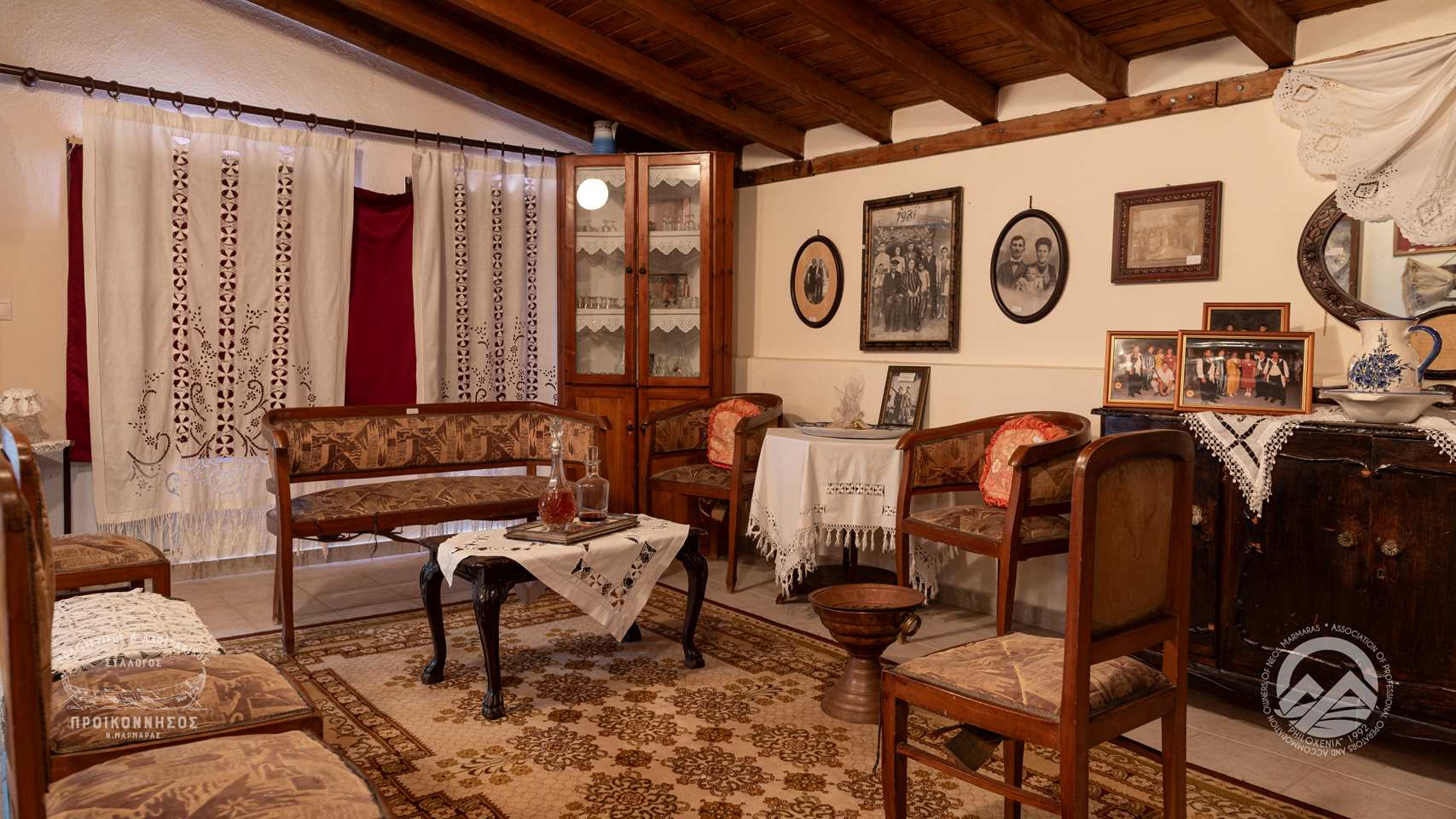
Everyday Life, Way of Life, and Aesthetic Sensibility
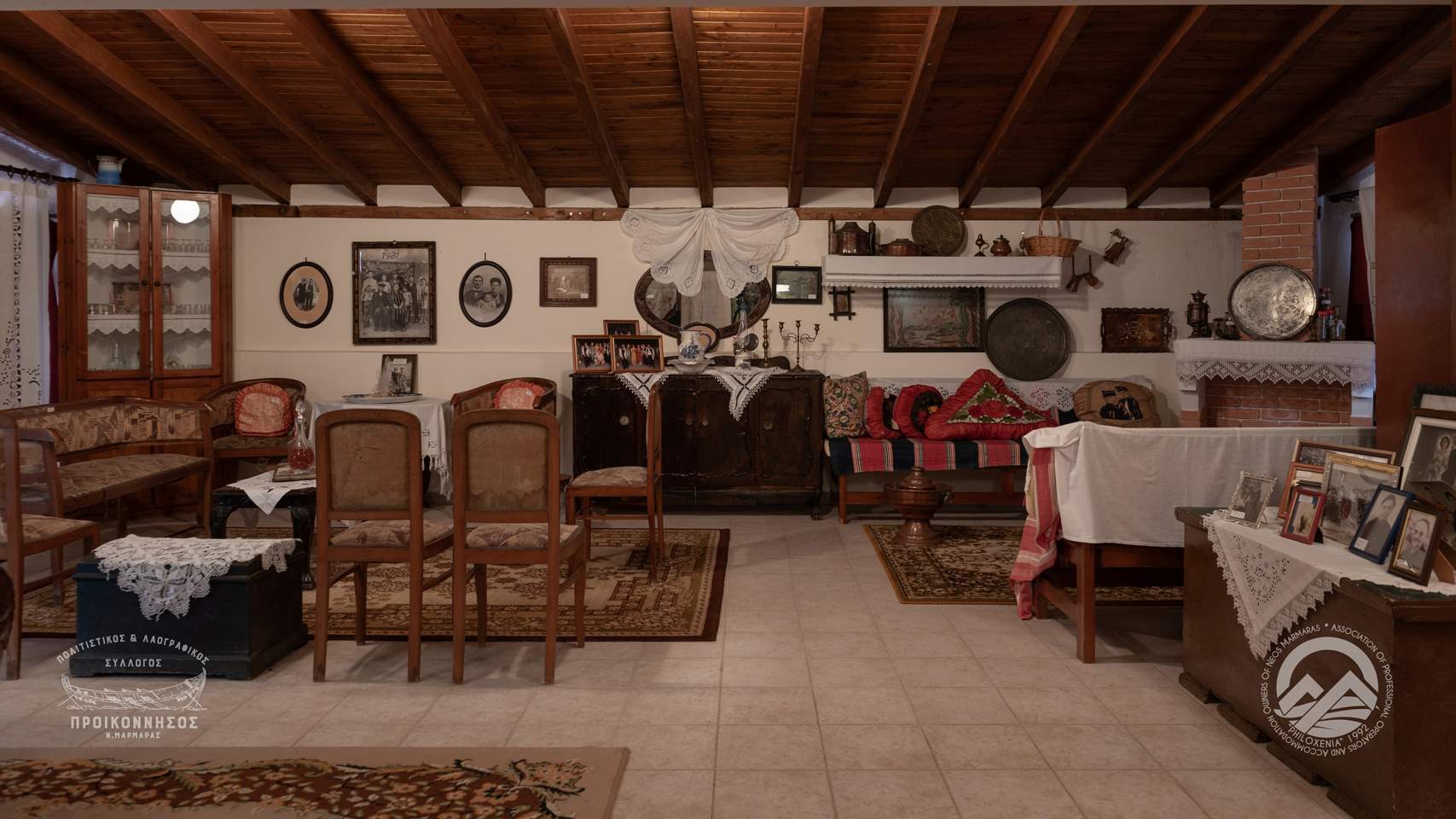
The people from Marmara who settled in their new homeland did not arrive “empty-handed.” Carrying with them traditions, skills, and a way of life that had flourished in Marmara / Prokonnesos, they shaped the foundations of both everyday life and the identity of the new community. From the construction of traditional fishing boats, known as sandales, to farming and building practices, as well as weaving and sewing techniques, they brought with them a living knowledge that would continue to define the character of Neos Marmaras.
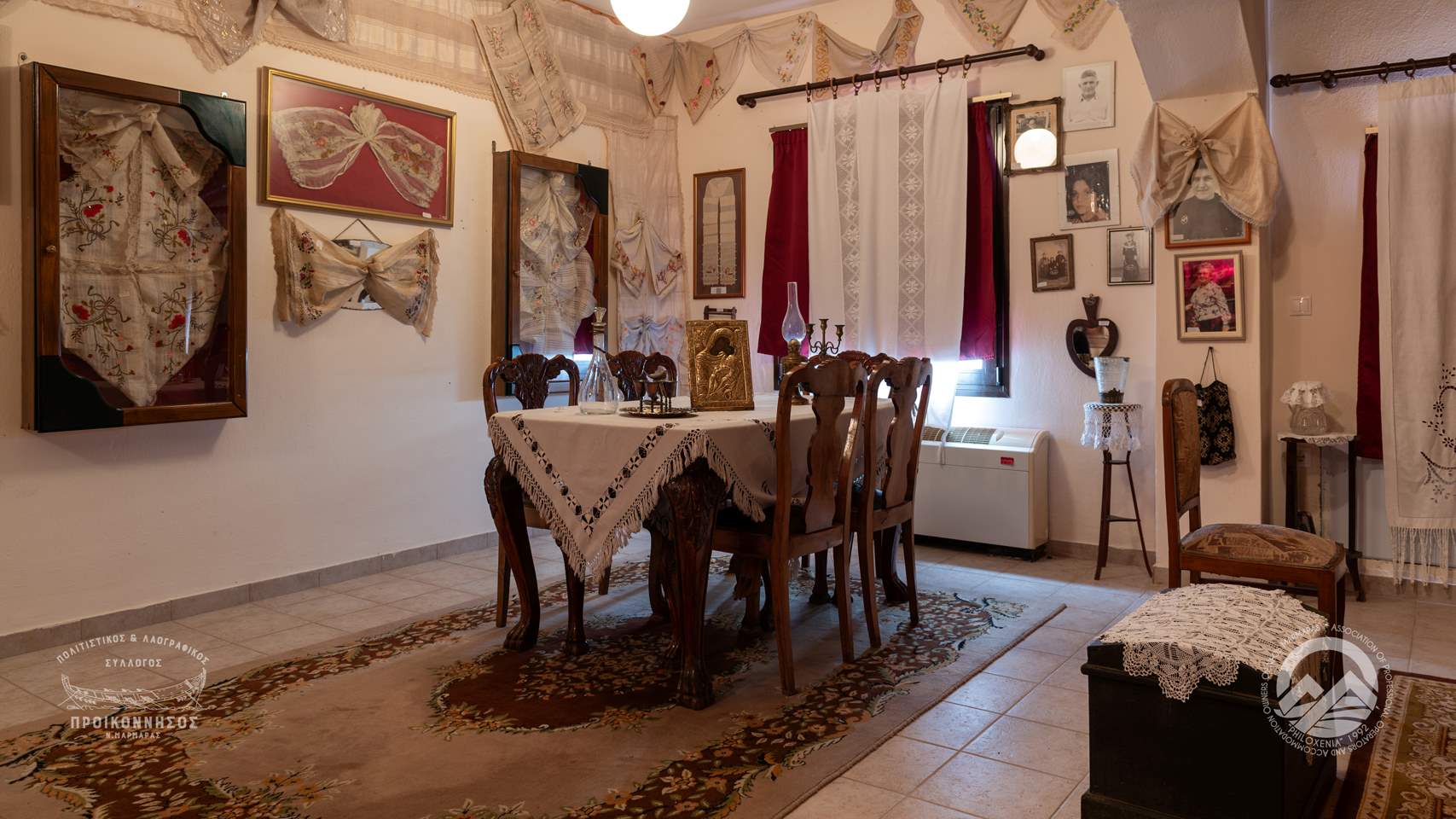
Daily life was marked by simplicity, but never by the absence of aesthetic sensibility. Weaving — which was not limited to the making of garments — stood out for its materials, colors, and embroidery, not as a display of wealth, but as an expression of good taste and social occasion. Embroidery and sewing formed part of everyday knowledge, passed down from one generation to the next, just like the songs and dances that accompanied the life of the community.
Through this everyday life, what was brought to Neos Marmaras was not simply a tradition, but an entire way of life — one that continues to be recognized to this day.
Paschalakio Cultural Center
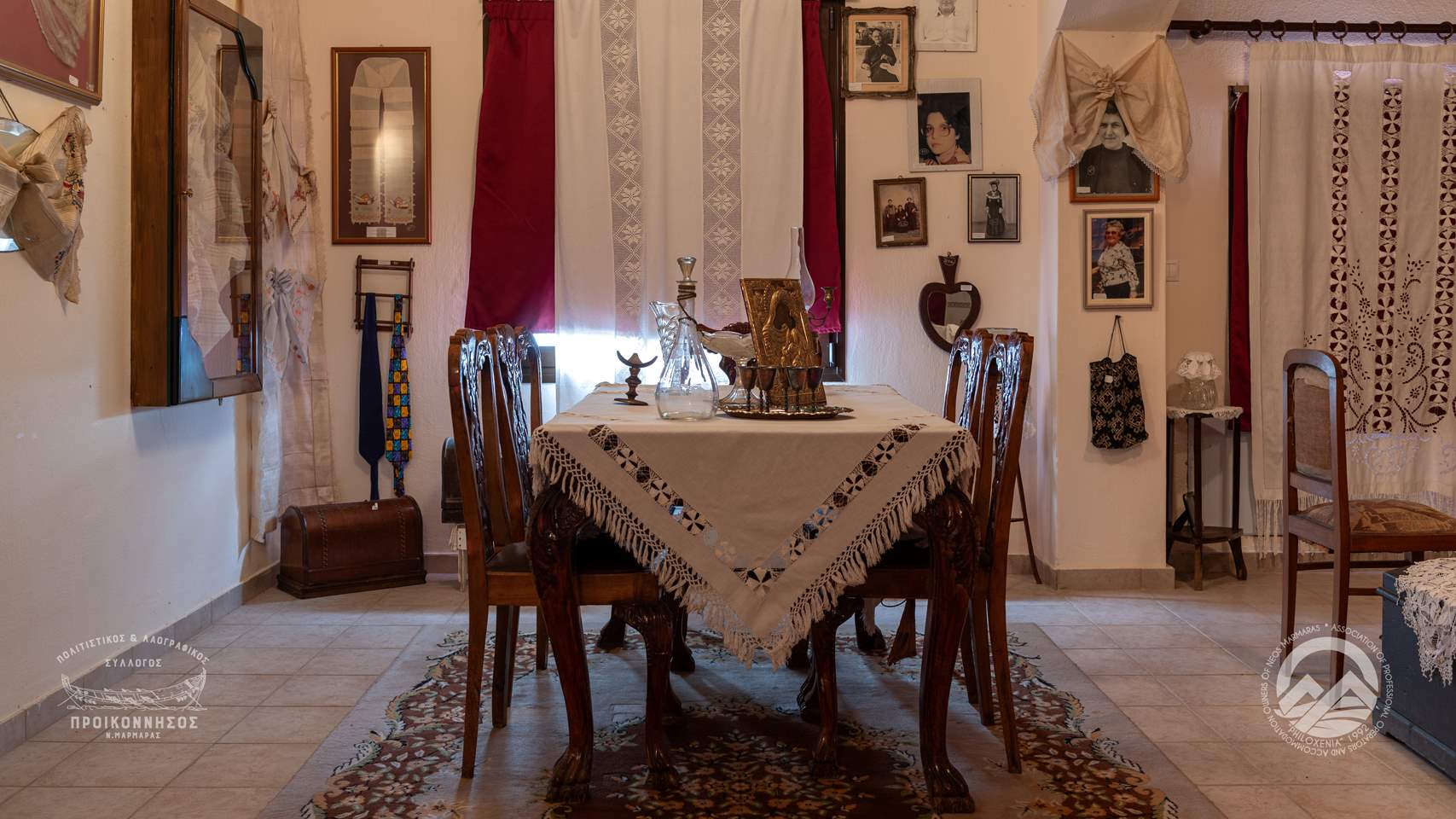
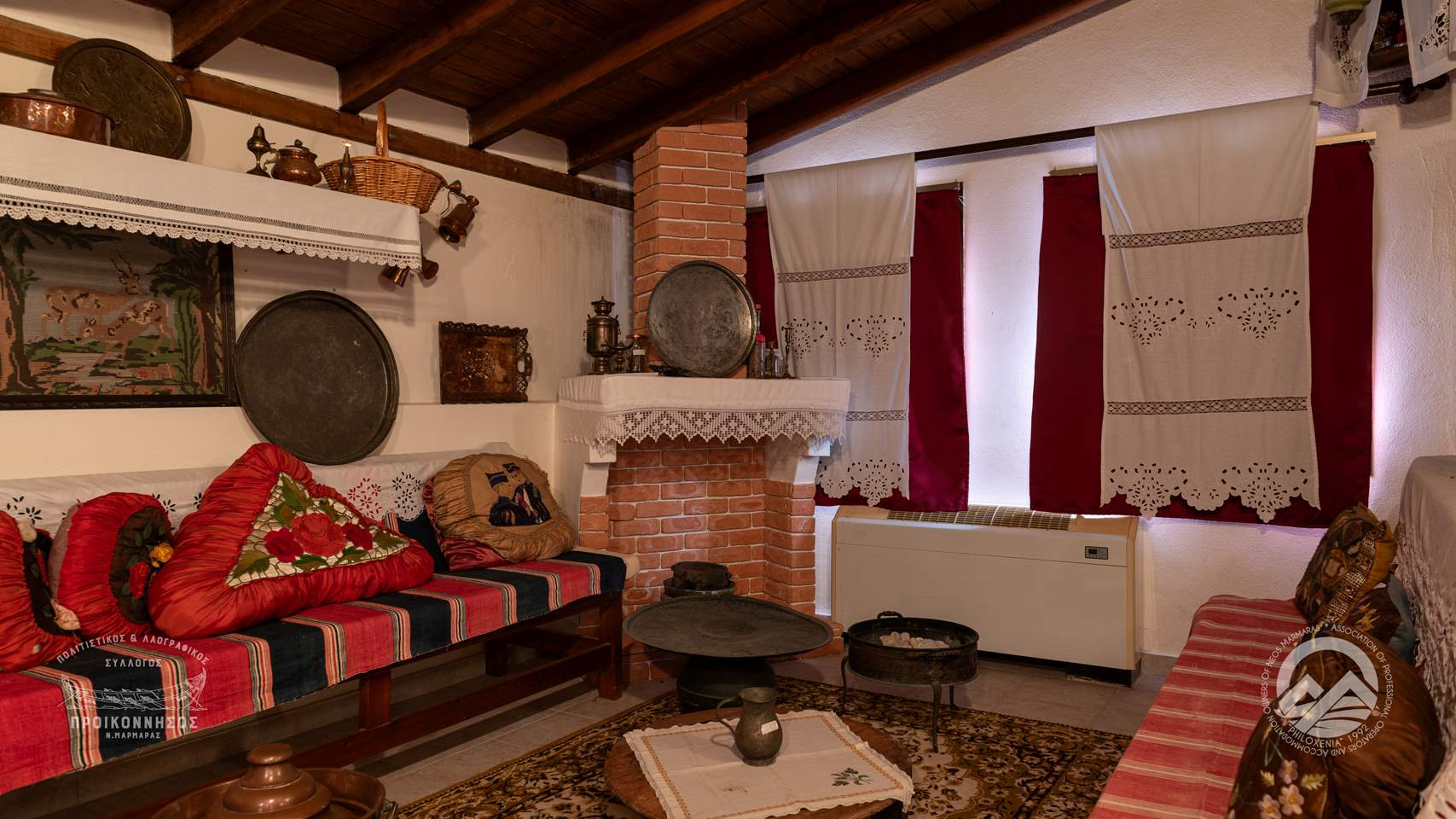
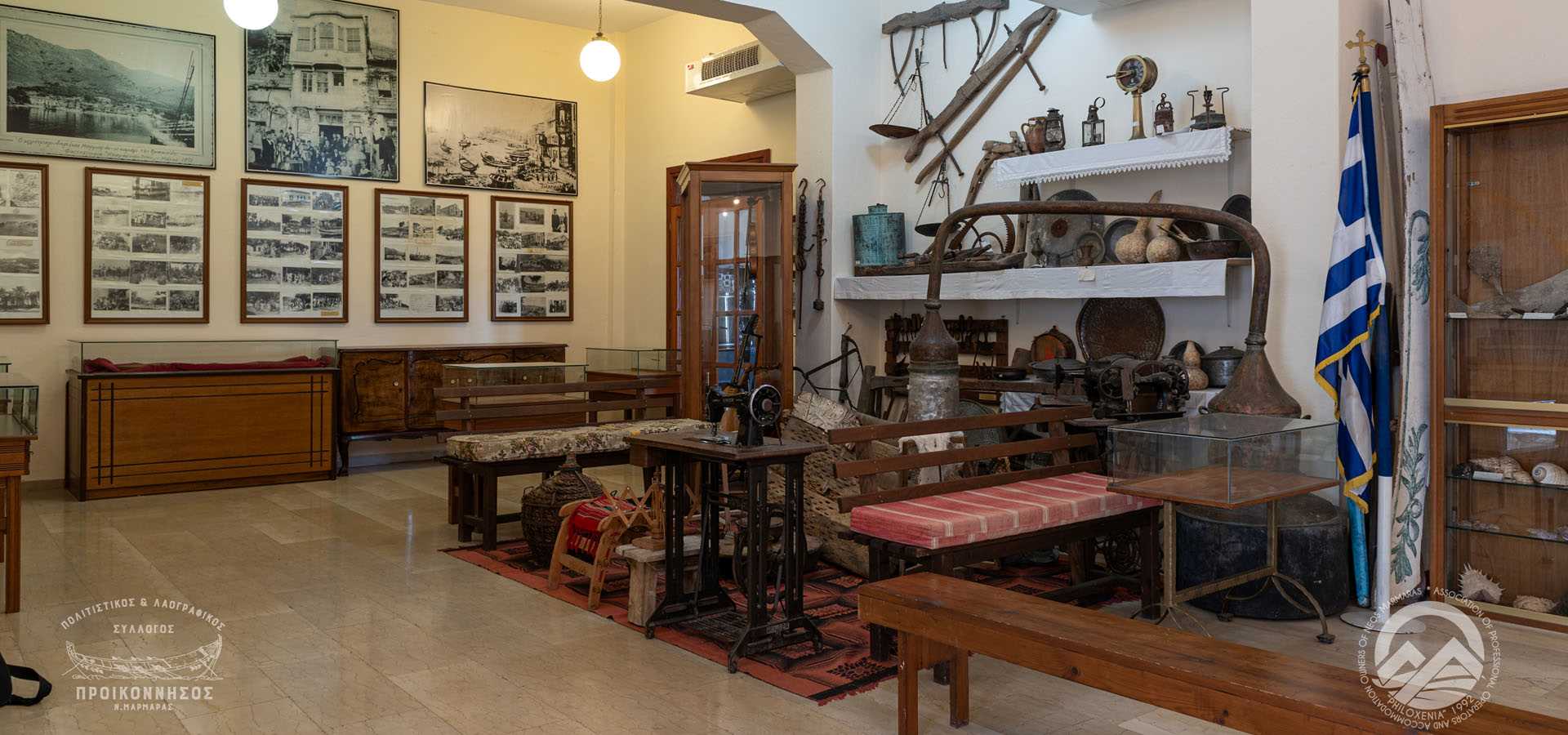
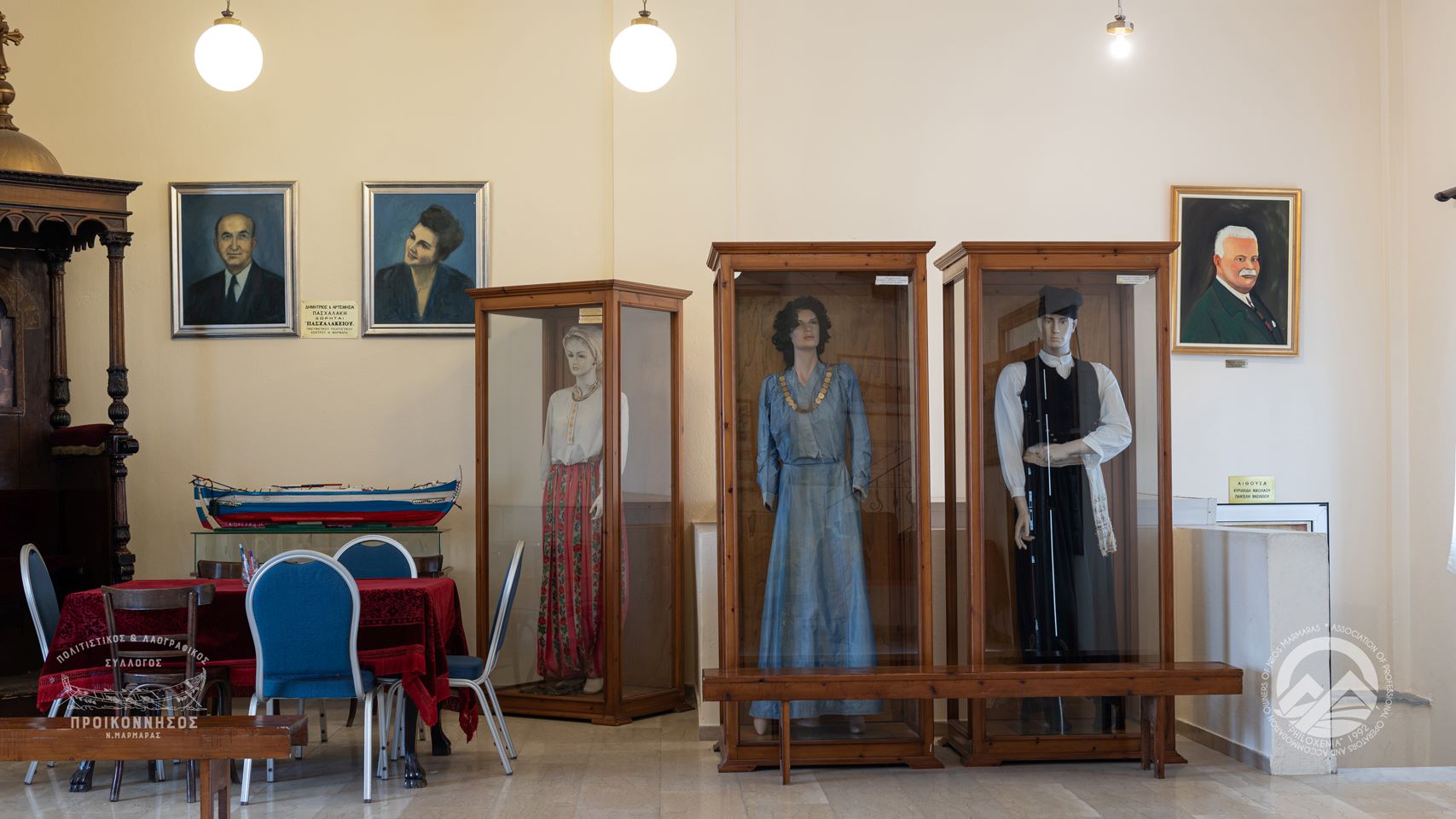
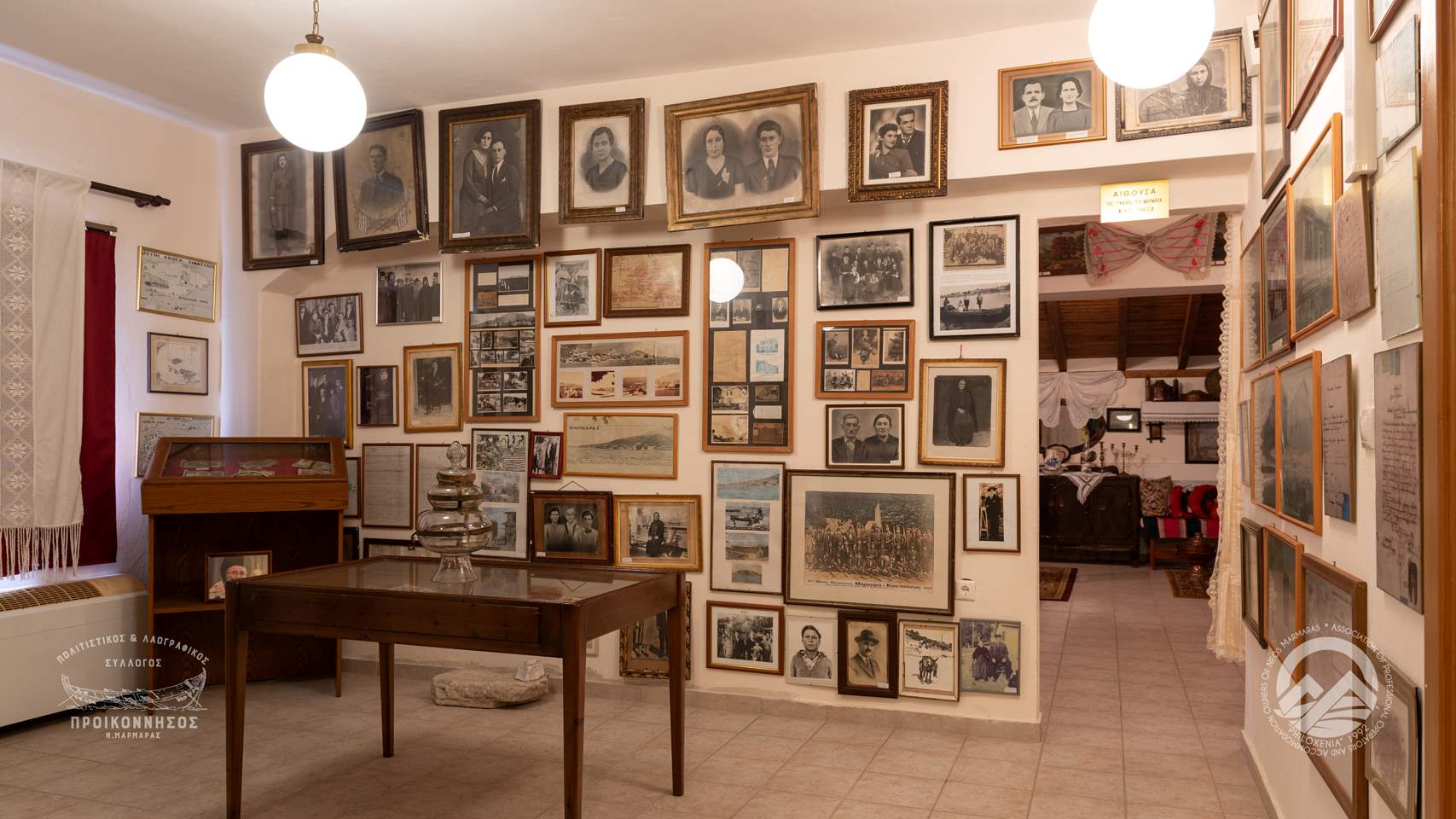
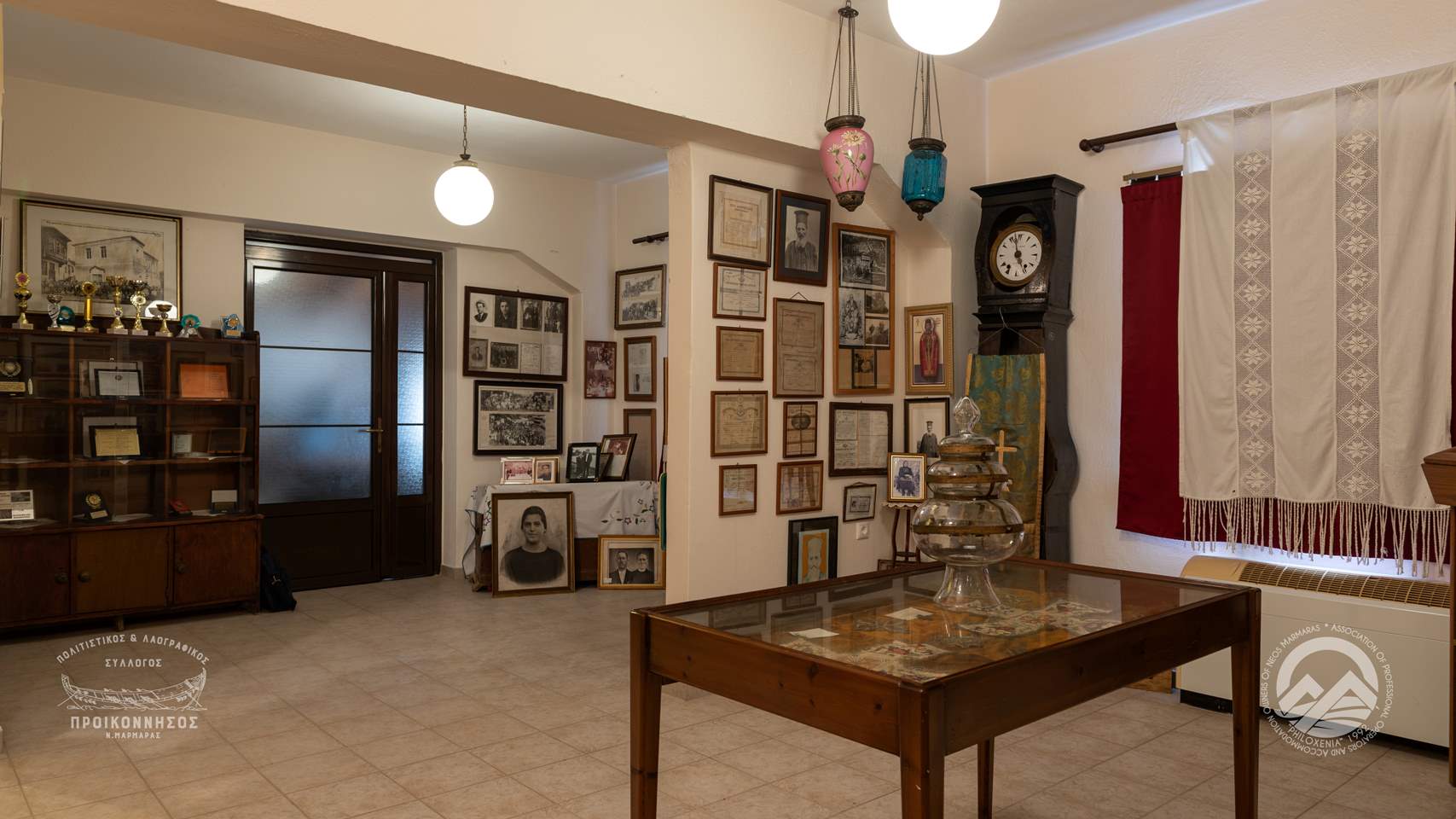
Today, this cultural heritage finds its home and voice in the Paschalakio Cultural Center, which serves as a living place of memory for Neos Marmaras. Within its spaces, the heritage of Prokonnesos and of the first people from Marmara who settled in this new land is carefully preserved and presented.
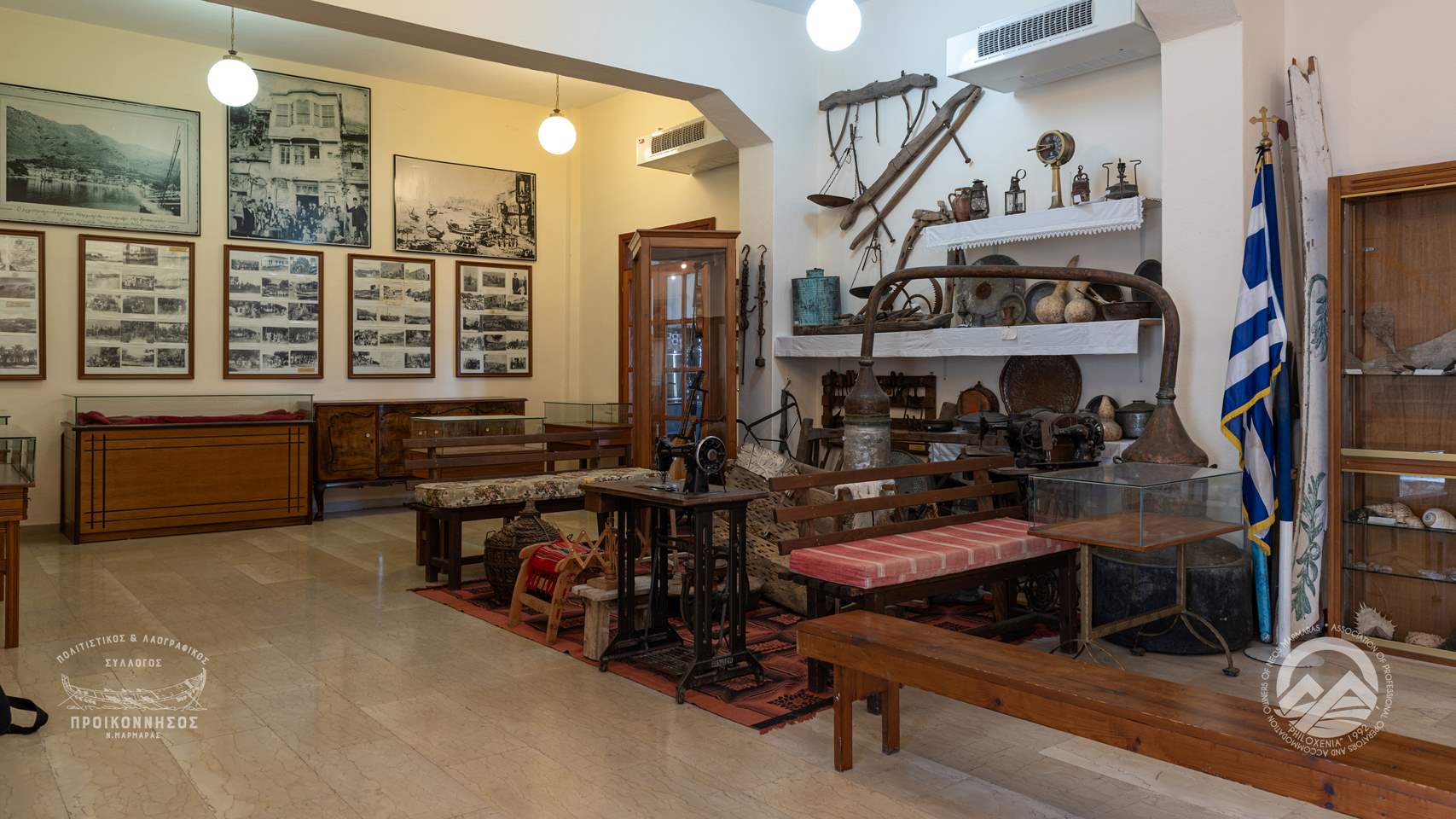
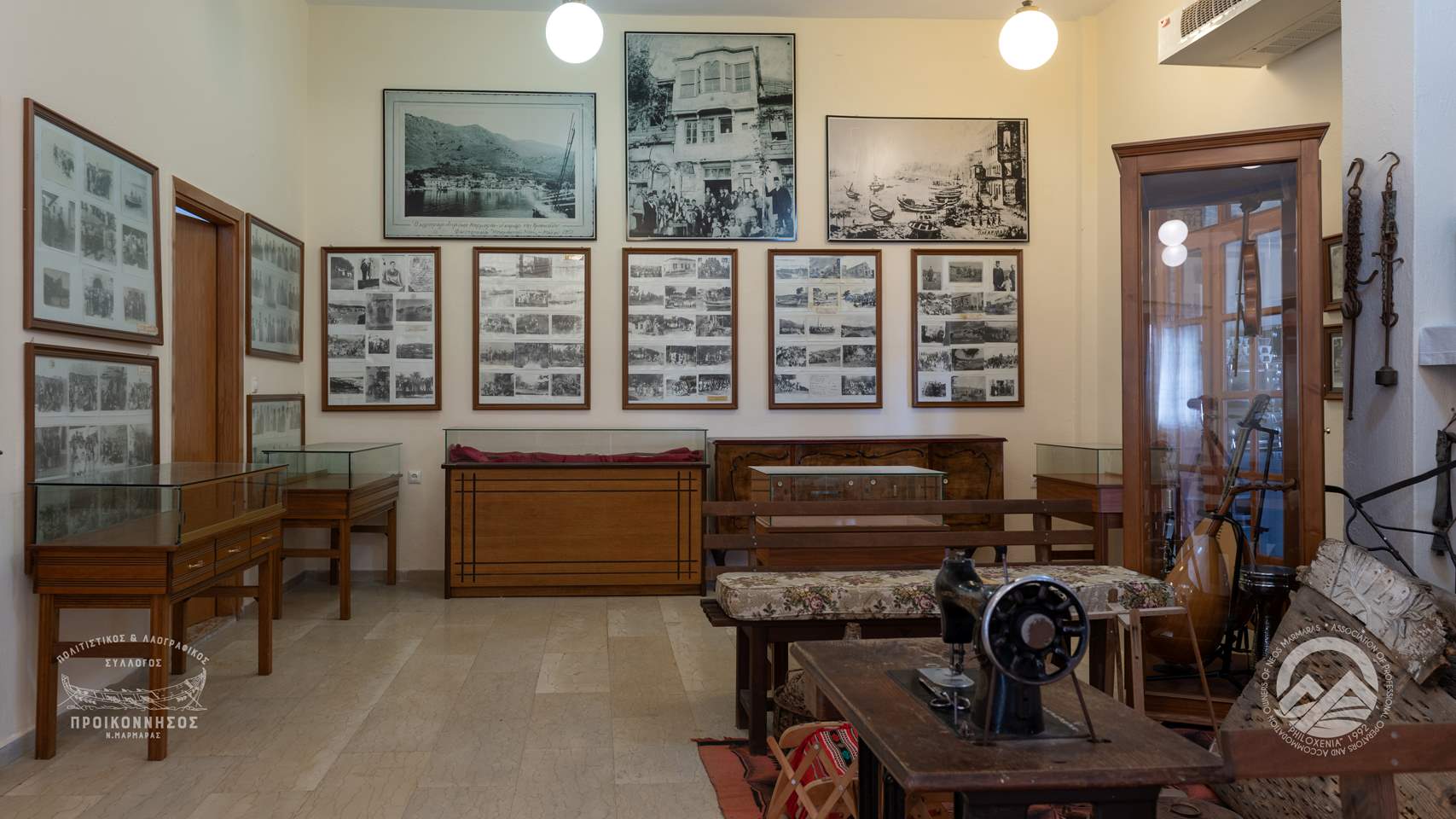
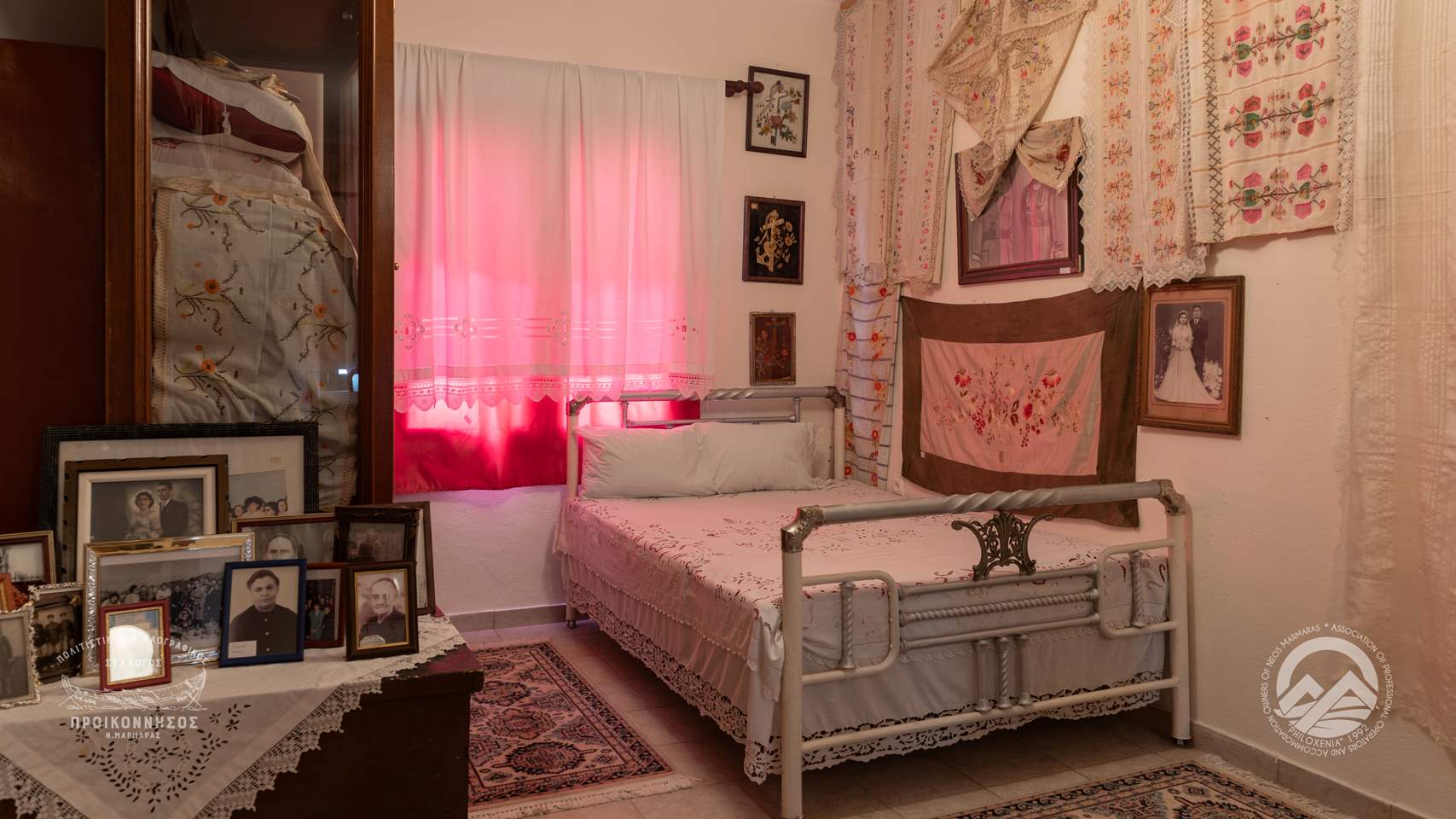
Visitors encounter authentic objects from everyday life: household utensils, tools, garments, woven textiles, historical heirlooms, and a rich photographic archive. Through these images and records, the memories of old Marmara, the refugee journey, the gradual formation of the new community, and life in Neos Marmaras from its foundation to the present day are vividly brought to light.
Paschalakio Cultural Center, a donation by Dimitrios and Artemisia Paschalakis, is far more than an exhibition space. It is a place of education, memory, and cultural continuity, where tradition is not presented as something belonging to the past, but as a living experience that connects generations and helps visitors understand the identity of Neos Marmaras.
The Cultural and Folklore Association of Prokonnesos
The Cultural and Folklore Association “Prokonnesos” plays a central role in preserving and actively promoting the traditional heritage of Marmara. The Association is a living cultural body through which the refugee memory, customs, and cultural practices of the people of Marmara are not merely preserved, but continue to find expression to this day. Its work extends across multiple forms of cultural expression.
Through dance groups for both children and adults, the knowledge of traditional dances and their cultural significance is passed on from one generation to the next. At the same time, the Association’s choir highlights the musical imprint of Marmara’s tradition through cultural presentations and events that represent the local community. The Association does not function as a repository of the past, but as a mechanism of cultural continuity. Through events, collaborations, and active participation in public cultural life, it makes a meaningful contribution to keeping the identity of Marmara alive, understandable, and accessible to younger generations as well as to visitors of Neos Marmaras.
A characteristic example of this living cultural memory could be seen, for many years, in the events organized by the Cultural and Folklore Association during the three-day celebration of Pentecost. During those days, Neos Marmaras was transformed into a stage where life in old Marmara was brought back to life through a series of traditional dances, theatrical performances, and songs. The choir, the dance groups, and the participants together formed a unified narrative that revived the matchmaking customs and the traditional wedding exactly as they had taken place in the old homeland. At the same time, the reenactment of fishing with the traditional sandala — the characteristic boat of the people of Marmara — captured their way of life and their close bond with the sea. These were not merely events to be watched, but deeply experiential occasions through which the memory, tradition, and identity of the place were passed down from one generation to the next.
“The visitor does not simply see ‘old things.’ They encounter a culture that did not fade away, but was carried across, took root, and endured. An authentic experience beyond sun and sea.”
The Exhibits Speak: Costumes, Objects, and Photographs
The tradition of Neos Marmaras is not reflected only in stories or written testimonies. It is also expressed in material form, through objects that carry everyday life, labour, and aesthetic value. Costumes, woven textiles, household items, tools, and photographs come together to create an authentic image of the life of the people of Marmara, both in their old homeland and after their settlement in Neos Marmaras.
Each exhibit serves as a silent narrator. The costumes speak of social occasions and aesthetic choices. The woven textiles reveal a deep connection to domestic care and craftsmanship. Everyday objects show how the household was organized, and how simplicity coexisted with refinement and good taste.
For the visitor, these exhibits are not simply “old objects.” They are traces of a culture that was not lost through displacement, but was carried across, took root, and adapted. A culture that continues to exist not as a memory, but as a living identity.
An Authentic Experience Beyond Sun and Sea
Neos Marmaras offers natural beauty, the sea, and a vibrant atmosphere. Yet its deeper advantage lies elsewhere: in its ability to offer meaning. It gives visitors the opportunity to discover a place that remembers, honours its history, and chooses to share it.